
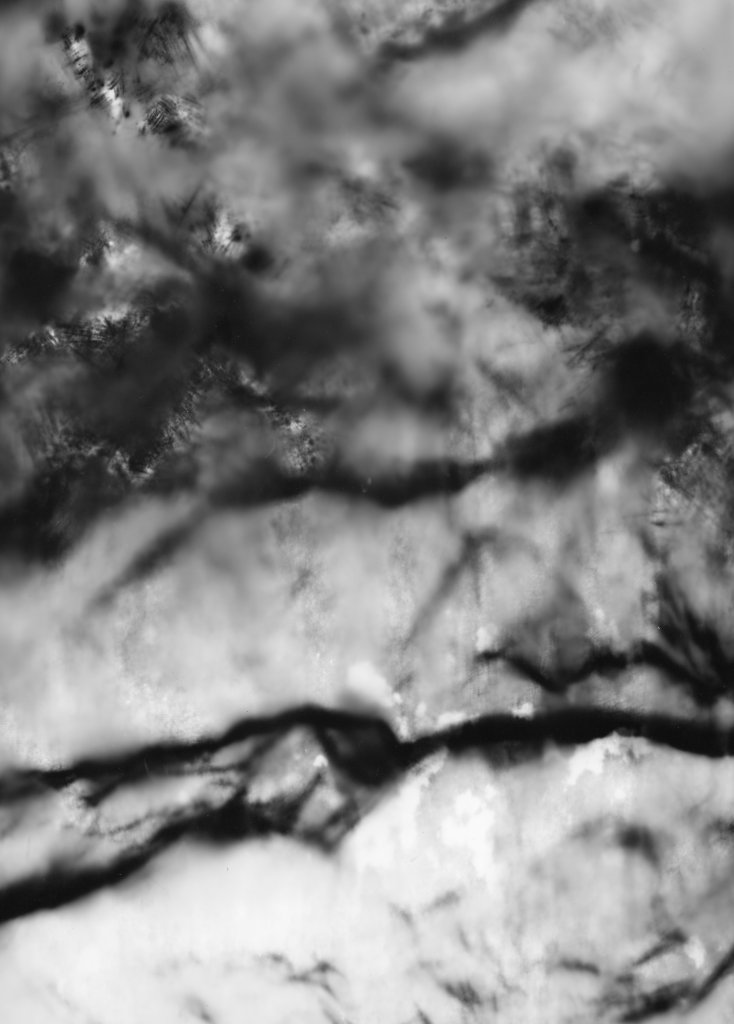
’-the air one loathsome mass of sultry and foul fog, like smoke; scarcely raining at all, but increasing to heavier rollings, with flashes quivering vaguely through all the air, and at last terrific double streams of reddish-violet fire, not forked or zigzag, but rippled rivulets-’. That’s John Ruskin, from his talk ‘The Storm-Cloud of the Nineteenth Century’, February 1884. Contemporary journalists suggested his sanity might have been in question.
I get this quote (in fact a fragment of a longer passage) not directly from Ruskin, but from Brian Dillon’s wonderful book ‘Suppose a Sentence’, in which each chapter explores and thinks about one sentence from a well-known writer. Dillon is superb at picking out the enigmatic, the puzzling, the haunting phrase: “No matter how blown about, however frayed at the edges by wind, or obscured to view by its own rain, a cloud, Ruskin insists, is always emphatically itself: ‘a cloud is where you see it, and isn’t where you don’t’ “. Well, yes. Or no, in Ruskin’s view, not in the nineteenth century, when the clouds have all gone wrong and started to ‘sulk for three months without letting you see the sun’.
The clouds in this particular image, if you see them as clouds, were produced by using a photogram as a negative; that is, I made a large photogram, tore off the paper backing so I just had the photographic surface, and did a reverse print. The bits that look like cross-hatching towards the top are the places where I sand-papered the back, getting it as thin as possible without actually tearing. Paper-thin, but then paper comes of course in many different thicknesses. It’s all a question of how much light can filter through.
 Dave Eva Photograms